Industrial 3D Printer Buyers Guide
Over 77% of printers marketed for high performance polymers can’t reliably print PEEK or ULTEM. Make your next investment with confidence, not consequences.

Polyetherimide (PEI), commonly known by its brand name ULTEM, is a high-performance thermoplastic that was developed by General Electric (currently SABIC) to replace traditional materials in demanding applications.
ULTEM exhibits exceptional mechanical properties, high chemical and thermal resistance, and excellent dimensional stability. ULTEM also comes in numerous grades, making it suitable for different applications and operating conditions.
Let’s review ULTEM’s material properties and the applications stemming from these qualities.
What is ULTEM?
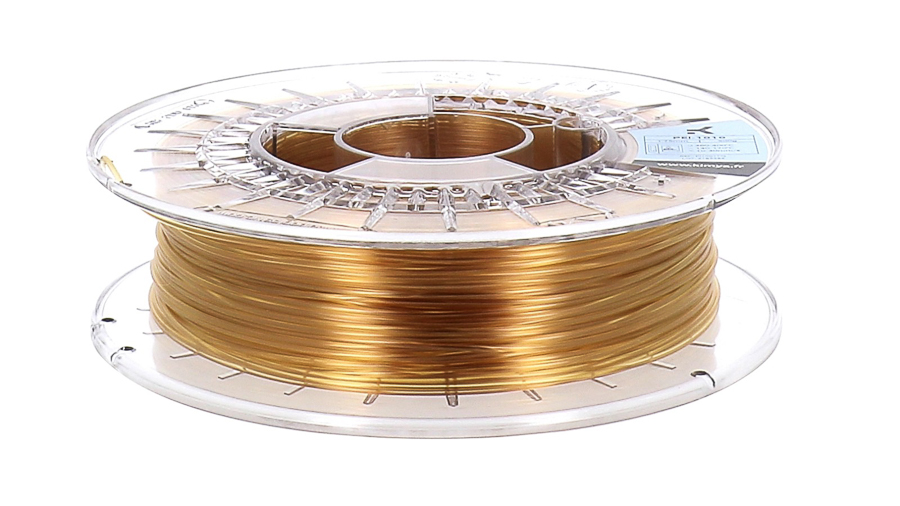
ULTEM is a strong and non-toxic semi-transparent thermoplastic. It can be used in numerous demanding applications, including those requiring both high mechanical properties and non-toxicity, e.g., medical and food applications.
Similar to other high-performance thermoplastics, ULTEM was developed to overcome the shortcomings of traditional plastics and metals in harsh environments.
ULTEM shows good processability using different techniques. Moreover, it comes in several grades and can be incorporated into composites, broadening its application range and allowing design engineers more flexibility.
Polyetherimide (PEI) Material Structure

Unlike other amorphous thermoplastics, PEI shows very high strength and stiffness. These unique properties are attributed to its molecular structure.
Its molecular structure consists of a rigid aromatic backbone, containing aromatic imide groups and ether linkages, with an isopropylidene bisphenol-A segment.
| Structural Feature | Properties Enabled |
| Imide groups | Resistance to hydrolysis, chemical reactions and oxidationRigidity, thermal stability and strengthStable charge distribution along the backbone, increasing dielectric strength |
| Ether linkages | Structural flexibility |
| Isopropylidene groups | Restricted chain mobility, which increases glass transition temperature |
The alternating structure of rigid imide and flexible ether linkages enhances processability and allows melting, while retaining high mechanical strength and stability at elevated temperatures. Moreover, the high aromatic content in the polymer endows it with its high flame retardancy.
ULTEM Material Properties
ULTEM has different grades, e.g., ULTEM 1000, ULTEM 1010, and ULTEM 9085. Each grade is suitable for a specific set of applications.
Here, we discuss the physical, mechanical, thermal, chemical, and electrical properties of ULTEM based on ULTEM 1000 and ULTEM 1010. Values may differ for different grades and different manufacturers of ULTEM, so take the below as broad guidance but consult data sheets for grade-specific properties.
ULTEM Physical and Mechanical Properties
| Property | Typical value/Rating |
| Density | 1.27 g/cm³ |
| Transparency | Semi-transparent or opaque |
| Tensile Strength | 90-130 MPa |
| Flexural Strength | 80-150 MPa |
| Impact Strength (notched, 23°C) | 32 J/m |
| Young’s Modulus | 3.4 GPa |
| Flexural Modulus | 2.9 GPa |
| Hardness | 109 (Rockwell M) |
| Creep Resistance | High |
| Coefficient of Friction | 0.3–0.4 (dry) |
ULTEM exhibits high mechanical stability under chemical and thermal stressors. This makes it a superior choice in high-stress environments, where metals are typically used.
Unlike metals, ULTEM offers high strength-to-weight ratios because it has significantly lower density than most metals (vs steel 7.85 g/cm³ and aluminum 2.7 g/cm³).
Strength and toughness
ULTEM has impressive tensile strength (90-130 MPa, AISI 304 at 517 MPa for reference) and flexural strength (80-150 MPa), reflecting its high load-bearing capacity. These characteristic properties combined with ULTEM’s lightweight allow it to be used for applications requiring durability and low weight, such as automotive and aerospace applications.
However, due to its amorphous nature, its impact strength and fracture toughness are relatively low. ULTEM’s toughness is enhanced by blending with other high-performance polymers (Ultem HU1004) or by glass filling (ULTEM 2300).
Stiffness
ULTEM is a highly stiff material, with a modulus of elasticity of 3.4 GPa (AISI 304 is 200 GPa) and a flexural modulus of 2.9 GPa. This high stiffness combined with its high thermal and chemical resistance enables ULTEM’s use as a metal substitute in industrial and structural parts subjected to harsh conditions, such as brackets, housings, and ducts.
Different grades offer different stiffness, expanding its application prospects and enhancing its processability for 3D printing.
Hardness and deformation
ULTEM exhibits one of the highest surface hardness values among high-performance thermoplastics. This contributes to its exceptional dimensional stability and low internal stresses.
ULTEM has a high creep resistance under constant load, especially under dry conditions. This makes ULTEM an excellent material to be used in parts under tension such as springs or bolted joints.
Wear resistance
ULTEM has a moderate coefficient of friction. However, the wear resistance of unfilled ULTEM is lower than other high-performance materials, limiting its use in tribological applications. This is typically enhanced by integrating it with an internal lubricant, such as polytetrafluoroethylene (PTFE) to form ULTEM 4001, or a combination of materials, such as in the case of ULTEM 4000, which is filled with glass fiber, PTFE, and graphite powder to improve ULTEM internal lubrication.
ULTEM Thermal Properties
| Property | Typical value |
| Glass Transition Temperature (Tg) | 217 °C |
| Melt Temperature | 350 to 410 °C |
| Heat Deflection Temperature (HDT) | 209 °C at 0.45 MPa192 °C at 1.8 MPa |
| Operating Temperature | -46 to approx 170 °C |
| Thermal Conductivity | 0.243 W/m.K |
| Coefficient of Linear Thermal Expansion (CLTE) | 29.81-36.08 µm/(m*°C) |
ULTEM’s thermal properties are what really set it apart. ULTEM exhibits a very high glass transition temperature (Tg) of 217 °C. Moreover, owing to its amorphous nature, it does not have a sharp melting point. Instead, it starts to soften at temperatures higher than its Tg.
The ULTEM melt temperature often noted in data sheets (and in the above table) reflects the temperature range when ULTEM is sufficiently flowing and processable.
Despite its high linear thermal expansion coefficient, the head deflection temperature of ULTEM (192 °C under 1.8 MPa) indicates that it can be used under heavy loads at high temperatures, where most high-performance thermoplastics start to deform. In addition, ULTEM can be used for continuous operation at 170 °C with minimal degradation. These properties make ULTEM ideal for applications requiring materials with high resistance to heat and thermal cycling.
Finally, ULTEM’s low thermal conductivity (0.243 W/m.K) reflects its thermal insulation properties, allowing its use in applications requiring thermal insulation, such as electronic devices.
ULTEM Chemical Properties
| Property | Rating |
| Solubility in Different Solvents | Inert to most solvents and acids, except halogenated hydrocarbons and polar aprotic solvents |
| Oxidation Resistance | High resistance at elevated temperatures |
| Flammability UL94 (thickness ≥0.75 mm) | V0/self-extinguishing |
| Limiting Oxygen Index (LOI) | 44…47% |
| Moisture absorption | 0.2% after 24 h and 0.7% at equilibrium |
ULTEM exhibits exceptional chemical resistance. ULTEM’s chemical properties, especially its high hydrolysis resistance and low flammability, put it at the forefront of the high-performance polymer category.
Hydrolysis resistance
ULTEM absorbs very little moisture (0.2%-0.7%), maintaining its mechanical properties and dimensional stability under humid conditions. In fact, ULTEM 1010 can maintain ±0.2% dimensional accuracy for more than 50 autoclave cycles at 180°C/100 psi, showing a moisture absorption of <0.5%, which prevents tool degradation.
Chemical resistance
ULTEM is inert to most solvents and acids, except halogenated hydrocarbons and polar aprotic solvents because of its amorphous nature.
PEI exhibits an inherent resistance to alcohols, acids, and aliphatic hydrocarbons, with no change in mechanical properties. This allows it to be used in biomedical and industrial applications, where the use of these chemicals is a regular occurrence.
Flammability
ULTEM shows inherent flame retardancy, with LOI of 44…47%, and low generation of smoke and toxic combustion products. This allows it to be safely used in sensitive applications, e.g., aircraft interior.
ULTEM Electrical Properties
| Property | Typical value |
| Dielectric Constant | 2.8-3 |
| Dielectric Strength (in oil) | 16-33 kV/mm |
ULTEM is an ideal electrical insulation material owing to its high dielectric strength (16-33 kV/mm), low dissipation factor, and low dielectric constant (2.8-3) over a wide frequency range at high temperatures. This dielectric stability over a wide frequency range means that its insulation properties do not degrade with the change in frequency. This enables it to be used for electrical and electronic components used at high frequencies.
Other Qualities
Biocompatibility
ULTEM has good biocompatibility, and several grades of ULTEM are FDA-approved for food and biomedical applications. In fact, ULTEM 1010 is the only NSF 51-certified FDM thermoplastic. This makes ULTEM a strong choice for biomedical applications and applications involving food contact.
Radiation resistance
ULTEM maintains its mechanical stability under prolonged exposure to UV radiation. It has one of the highest radiation resistance values among high-performance plastics.
Dimensional stability
As mentioned above, the combined effects of several properties of ULTEM, i.e., low water absorption, high-temperature performance, chemical resistance, and radiation resistance, provide great dimensional stability.
This is relevant for both use under differing and severe conditions as well as manufacturing parts to tight tolerances. Thus, ULTEM can be used in applications requiring parts with accurate dimensions and high thermal and chemical resistance, e.g., electronics used in severe environments.
ULTEM Material Applications
Aerospace
Owing to its low flammability and lightweight, ULTEM is an excellent material choice for aircraft and space applications. In particular, the ULTEM 9085 grade is used for aerospace applications owing to its superior flame retardancy (UL94 V0), low smoke emissions, and low toxicity.
For example, ULTEM is typically used for seat fittings, structural components, such as brackets supporting various installations, and ventilation systems.
Automotive
ULTEM is one of the most cost-effective metal alternatives out there. It is sufficiently strong to be used in certain parts of vehicles while reducing their overall weight. ULTEM’s other properties, i.e., chemical resistance to automotive fuels, fluids, and oils as well as excellent heat resistance, also allow its use in under-hood components, transmission parts, throttle bodies, ignition components, thermostat housings, and electromechanical systems.
Biomedical
Some grades of ULTEM can withstand repeated sterilization cycles (at least 300 in STERRAD, which uses hydrogen peroxide and gas plasma). ULTEM is also biocompatible (ULTEM 1010 is NSF 51 and USP Class VI-certified), making it an excellent material to manufacture dental implants as well as medical devices, surgical tools, and other sterilizable parts.
Electronics and Electrical
Due to ULTEM’s excellent electrical insulation performance, it is used for several electrical and electronic applications.
ULTEM’s insulation combined with its lightweight make it suitable for consumer electronics, such as wearables and mobile devices. On the other hand, this excellent insulation combined with its high-temperature resistance, excellent dimensional stability, and flame retardancy enables its use in demanding electrical applications such as housings, connectors, and fuel cell components.
Industrial
ULTEM can be used in several industrial environments due to its strength, durability, wear resistance (specific grades), and high-temperature resistance, with its lightweight and chemical resistance giving it a competitive edge over metals.
Oil and Gas
ULTEM can be used in oil pump components, sensor housings, drill components, and other tools used in the oil industry. For example, 3D-printed ULTEM 9085 exhibits exceptional long-term performance in oil and gas applications.
Food
ULTEM is FDA-approved (certain grades) and is resistant to stress cracking in environments containing fats, oils, alcohols, acids, and other aqueous solutions. It can thus be used to manufacture reusable food containers and food-handling tools such as food trays, soup mugs, steam insert pans, and microwavable bowls.
PEI Copolymers, Blends, and Composites
In order to modify its properties and overcome its weaknesses, PEI is modified to form copolymers, blended with other materials, or filled with fibers to form composites. ULTEM 9085, for example, is a result of one of these methods of modification.
Copolymers
There are numerous grades of PEI copolymers. These are the most common:
SILTEM
Main area of improvement: flexibility
SILTEM is a family of polyetherimide-siloxane (PEI-Si) copolymer resins. These copolymers were developed to combine the high-temperature performance of PEI and the flexibility of silicone elastomers, allowing their use for isolation in wire and cable applications.
ULTEM CRS
Main area of improvement: chemical resistance
One of the weaknesses of PEI is its vulnerability to some chemicals. The ULTEM chemical-resistant series (CRS) is a copolymer that was developed to rectify this weakness, with a high resistance to harsh chemicals, such as strong acids, bases, aromatics, and ketones.
Blends
Several blends of PEI are available. The best-known grade is ULTEM 9085, which is a PEI–polycarbonate blend.
Main areas of improvement:
- processability
- ductility
Blending PEI and polycarbonate, e.g. ULTEM 9085, enhances material flow and ductility, while maintaining its flame retardancy as well as its low toxicity and smoke generation, making it a strong choice for aerospace applications. While lower than those of ULTEM 1010, ULTEM 9085 retains decent mechanical properties with its enhanced processability, making it one of the preferred ULTEM grades for 3D printing.
Composites
There are two main types of PEI composites: glass- and carbon-filled PEI. Each type gives PEI specific properties useful for different applications. Other types are filled with a combination of materials to enhance a specific property, e.g., PTFE +glass+carbon filling for better wear resistance.
Glass-fiber-filled ULTEM
Main areas of improvement:
- mechanical properties under sustained load
- coefficient of linear thermal expansion (CLTE)
PEI is reinforced with glass fiber (10%-40%) to further enhance its mechanical properties, especially creep resistance under sustained loads. Filling also significantly reduces PEI’s CLTE, making it comparable to that of aluminum alloys.
For example, ULTEM 2300 (30% filling) is used as an alternative to aluminum in several applications, especially aerospace and biomedical applications.
Carbon fiber-filled PEI
Main area of improvement: stiffness and strength
Carbon fiber-filled PEI exhibit enhanced stiffness and strength compared to unfilled PEI, with values that are comparable to or higher than those of aluminum with a significant reduction in weight. Carbon-filled PEI also maintains its low flammability, making it an even better choice for aircraft components.
Comparison to Other High-Performance Polymers
The choice of high-performance plastics depends on the application requirements. Cost is a major driver when it comes to material selection, and that is where ULTEM shines as it provides excellent mechanical properties at a lower price point compared to other thermoplastics.
| Property | ULTEM | PEEK | PPS | PES | PEKK |
| Continuous operating temperature | 170 °C | 260 °C | 250 °C | 220 °C | 260 °C |
| Mechanical properties at high temperatures | Good up to 170°C, drops off above | Most consistent performance | More brittle than ULTEM, but considerably better wear resistance | Lower performance than ULTEM | Slightly higher performance than ULTEM |
| Chemical resistance | Good | Excellent | Better than ULTEM, with a wider range of chemicals | Lower than ULTEM | Better than ULTEM |
PEEK’s properties make it a good candidate for the ultimate overall high-performance polymer, with only a few polymers surpassing it in some areas. However, ULTEM offers comparable properties, especially filled and blended grades, at 1/3 of the price, making it the preferred choice in many instances.
PPS outperforms ULTEM in most categories, but it has a significantly lower dielectric strength, making ULTEM the stronger choice for electrical insulation applications.
Similar to PEEK, PEKK has superior properties to ULTEM in most areas, however, it is much more expensive.
PES offers similar properties to ULTEM at a similar price point. However, ULTEM provides better chemical resistance and certifications.
ULTEM 3D Printing
For practical purposes, fused filament fabrication (FFF, also known as fused deposition modelling or FDM) is the only commercial route for printing ULTEM. As a thermoplastic, ULTEM cannot run on resin processes like SLA or DLP, and while powder bed fusion (SLS) can sinter high-temperature polymers in principle, PEI powder is not commercially available at scale. FFF suits ULTEM well because the material’s amorphous structure stays processable across a wide temperature window.
Two grades cover most FDM work, and the choice between them is a trade between printability and performance.
| Grade | Base polymer | Printability | Key advantages | Best for |
| ULTEM 9085 | PEI-polycarbonate blend | Easier, better flow and less warping | FST certified, more ductile | Aircraft interior parts, easier prints |
| ULTEM 1010 | Pure PEI | Harder, higher temps and more warp-prone | Highest strength and heat resistance, NSF 51 and USP Class VI certified | Maximum thermal and chemical performance, food and medical parts |
ULTEM 9085 is better suited for certified aerospace parts or a more reliable print, and 1010 if there is a need for maximum heat resistance, chemical resistance, or food and medical certification. Carbon-fiber-filled grades such as ULTEM 1010 CF are also printable where added stiffness is worth the higher cost. Bear in mind that FDM parts are anisotropic, so a part is weaker along the build direction (Z), and process parameters such as raster angle, raster width, and air gap change the final mechanical properties significantly.
ULTEM is also demanding to print. Its glass transition temperature of 217 °C means a part will warp or lift off the bed unless it is held hot for the full build, so an actively heated chamber is a prerequisite for successful printing. In practice that means a printer built for high-temperature polymers: an all-metal hot end running roughly 350 to 400 °C, a high-temperature bed, and a chamber that holds elevated temperatures throughout the print. General-purpose desktop machines cannot sustain those conditions, which is why many printers marketed as high-performance still cannot run ULTEM reliably.
The Plastic for Serious Applications
In summary, ULTEM exhibits excellent properties, especially blended and filled grades, which can replace aluminum in several demanding applications. In addition, ULTEM’s certified biocompatibility and superior dimensional stability allow its use in biomedical applications and the food industry. ULTEM 3D printing is facilitated by its processability within a wide temperature range.
Achieve New Levels of Part Performance & Throughput
3D print the world's highest performance polymers - bigger, faster, and stronger than ever.