Industrial 3D Printer Buyers Guide
Over 77% of printers marketed for high performance polymers can’t reliably print PEEK or ULTEM. Make your next investment with confidence, not consequences.

Bendix develops automation systems from the ground up, requiring extensive custom tooling that must be rapidly designed, tested, and refined.
AON3D Hylo and high performance polymers let Bendix move 3D printing beyond prototypes into large, durable production tooling.
Reduced a $15,000–$20,000 fixture to $500–$600, while achieving .005″ planarity and avoiding replacement lead times of up to 16 weeks.
The Challenge: Building Manufacturing Capability from the Ground Up
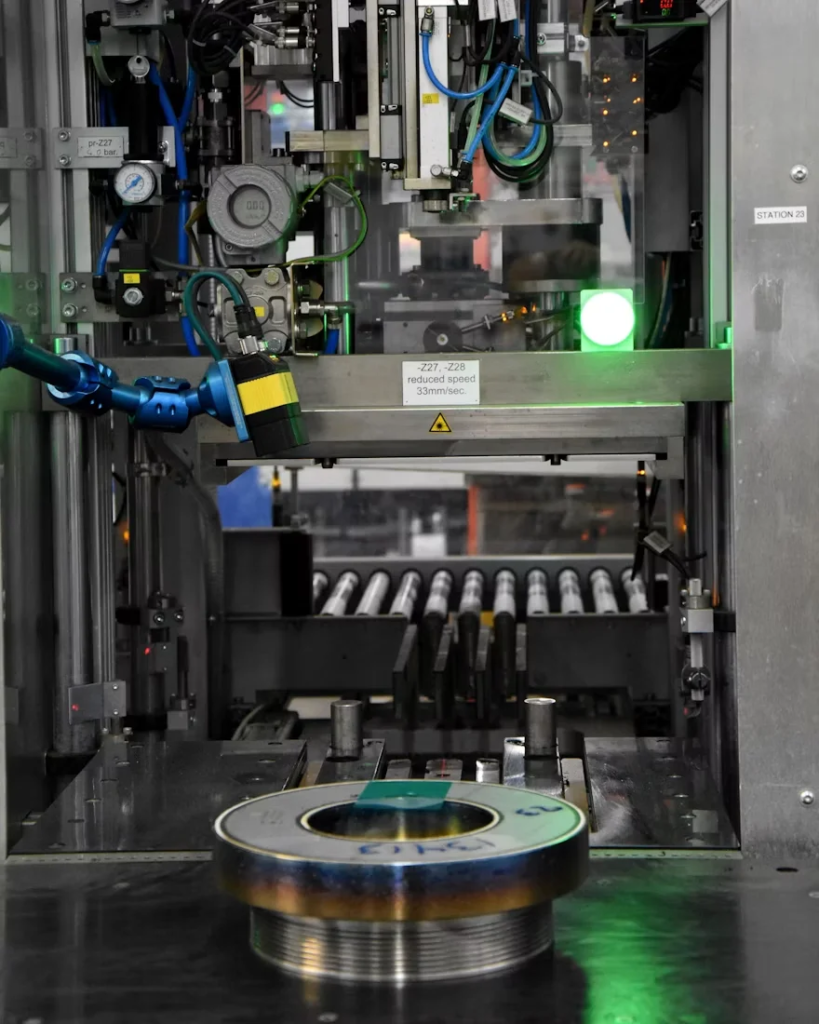
At Bendix, the Advanced Manufacturing Engineering team develops automation systems, assembly processes, controls, and tooling internally rather than purchasing complete manufacturing cells from outside integrators. By maintaining ownership of process development, engineers can rapidly refine manufacturing systems as requirements evolve, but it also means new ideas must be tested, refined, and validated.
The challenge wasn’t just designing the tooling and process—it was managing the cost and lead-time penalties that came with every design revision. In a workflow where iteration was essential, traditional manufacturing methods introduced friction at every step of the development cycle.
Bendix needed a way to move faster and affordably without sacrificing performance, repeatability, or confidence in the outcome.
Solution: Transitioning From Prototyping to Production Tooling
By the time Bendix began evaluating AON3D, additive manufacturing was already a core part of its manufacturing engineering workflow. Desktop systems allowed engineers to rapidly iterate tooling, test process changes, and accelerate development.
What began as a rapid iteration tool quickly became a critical manufacturing engineering capability. As the team pushed additive into larger, more demanding applications, they began encountering requirements that desktop systems couldn’t reliably deliver – large one-piece fixtures, exceptional flatness requirements on those larger prints, demanding thermal performance, and durable tools.
I could print a tool, go downstairs and test it, throw it away 20 minutes later and make my design modifications.
Jon Hembree, Advanced Manufacturing Engineer
Bendix began evaluating platforms capable of manufacturing production-grade tooling and ultimately selected the AON3D Hylo platform. The team needed access to high performance polymers capable of delivering the thermal resistance, durability, and mechanical performance required for demanding manufacturing applications, while maintaining the repeatability and dimensional accuracy required for their processes. Just as importantly, Bendix mandated the flexibility of an open material ecosystem free from proprietary markups and material/software restrictions. Having a closed ecosystem was unacceptable and any system that was closed was not considered.
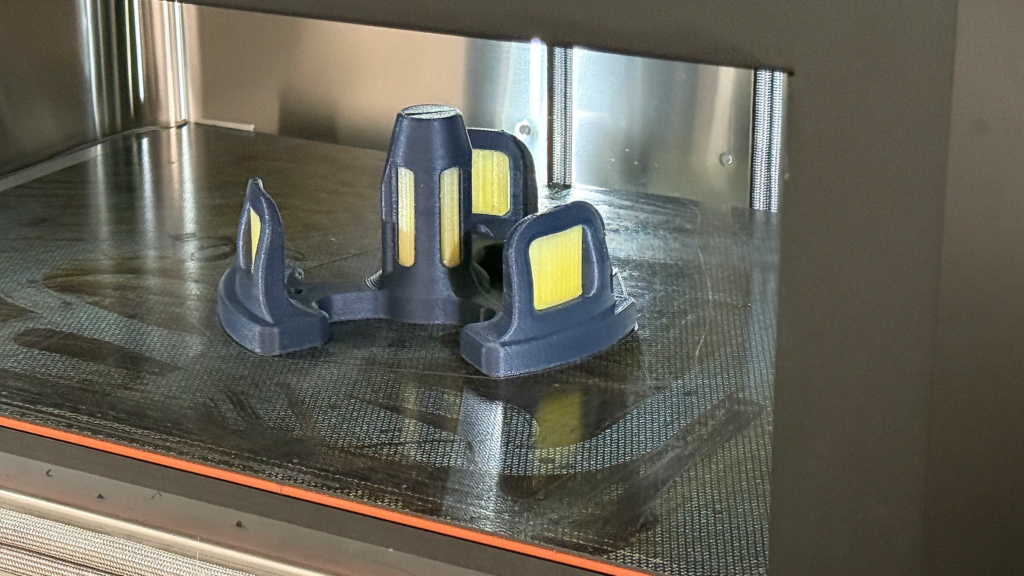
According to Hembree, the decision wasn’t driven solely by build volume or material capability. Basis software was a key differentiator because it helped improve the predictability of high-performance polymer printing. By automatically accounting for thermal variances throughout a build and adjusting process parameters accordingly, Basis improved confidence that large, expensive prints would come off the machine with the quality, dimensional accuracy, and performance required for production tooling. This is one of 2 requirements that made the decision to move forward with AON3D
The Results: Production-Grade Tooling Without the Costs or Lead Times
For one highly specialized production fixture, Bendix reduced tooling costs from an estimated $15,000–$20,000 to approximately $500–$600 while achieving a required .005” planarity across a large span.
The impact extended beyond cost savings. By maintaining a digital inventory of tooling, Bendix eliminated the operational impact of damaging delicate, extremely difficult-to-reproduce fixtures with long lead times.
I just pull out my spare and queue another print—I’m not cutting a purchase order and waiting 16 weeks for the tool shop to manufacture another unicorn
For Hembree, the value extends beyond any individual application:
People try to look at the business case. It isn’t until you get to the other side of that investment that you realize all the other things you can do because you made that investment. And then you’re left wondering why you didn’t make the investment sooner.
About Bendix
Bendix Commercial Vehicle Systems is a leading manufacturer of braking, active safety, and air management technologies for commercial vehicles. Its Advanced Manufacturing Engineering team develops and deploys automation systems, manufacturing processes, and production tooling that support operations across Bendix facilities.
Achieve New Levels of Part Performance & Throughput
3D print the world's highest performance polymers - bigger, faster, and stronger than ever.