Industrial 3D Printer Buyers Guide
Over 77% of printers marketed for high performance polymers can’t reliably print PEEK or ULTEM. Make your next investment with confidence, not consequences.

Polyphenylsulfone (PPSU) is one of the best-performing amorphous engineering thermoplastics. It is a part of the polysulfone group, but it exhibits better impact strength than polysulfone (PSU) or polyethersulfone (PES).
Other highlights of PPSU include exceptional hydrolysis and impact resistance, good chemical and thermal properties, biocompatibility, and dimensional stability to name a few.
PPSU is a material that finds use from plumbing fittings and coffee machine components to thermostat housings and water pump impellers, and we will cover the material in depth to understand why it sees such a wide range of use in engineering.
What is PPSU?
PPSU is an amorphous high-performance thermoplastic composed of aromatic rings connected by sulfone and ether linkages. It was developed in the 1970s following the success of heat- and hydrolysis-resistant PSU (Udel).
PPSU can be produced via different chemical and polymerization pathways, and it can be processed by various methods, such as additive manufacturing (3D printing) and injection molding.
PPSU Material Structure
Polyphenylsulfone (PPSU) is an amorphous polymer composed of phenylene rings linked by sulfone and ether groups. The biphenylene in PPSU distinguishes it from its simpler PSU counterpart.
The biphenylene ether units increase PPSU’s impact strength and contribute to its molding processability. Also, they give PPSU a higher glass transition temperature compared to PSU.
In addition, the flexible ether links in PPSU provide low-temperature ductility and high impact strength. Moreover, the electronegative sulfone group restricts the rotation of the aromatic rings, increasing PPSU’s stability.
The aromatic-sulfone-ether backbone also gives PPSU its high resistance to hydrolysis because both the sulfone and ether groups are resistant to hydrolysis.
PPSU Material Properties
Most of the values reported here are average ranges based on unfilled PPSU filaments suitable for 3D printing. Printed part properties differ depending on the printing direction, and values corresponding to other grades and types, e.g., bulk resin or filled grades, can differ considerably.
When there is no filament data available, the data source is noted next to the value.
PPSU Physical and Mechanical Properties
| Property | Typical value/Rating |
| Density (g/cm³) | 1.28–1.3 |
| Tensile Strength (MPa) | 49–74.5 |
| Flexural Strength (MPa) | 89–114 |
| Impact Strength, Notched (kJ/m2) | 20.7–70 |
| Young’s Modulus (GPa) | 1.7–2.3 |
| Flexural Modulus (GPa) | 1.7–2.4 |
| Shore Hardness D | 77–79 |
| Elongation at Break | 50%–120% |
| Creep Resistance | High (bulk resin) |
| Coefficient of Friction (COF) | 0.4–0.5 (injection-molded) |
Similarly to other high-performance thermoplastics, PPSU exhibits a high strength-to-weight ratio, making it suitable to replace metals in applications that combine low weight with high mechanical and chemical performance.
Strength and toughness
PPSU exhibits high tensile and flexural strengths (up to 74.5 and 114 MPa, respectively), allowing it to be used for applications requiring relatively high load-bearing capacity under harsh conditions at more affordable prices than PEEK or PEKK, with a price difference up to 2x depending on the vendor. This is also the reason why Open Materials can be central to bringing 3D printing operations into profitability.
The amorphous sulfone-linked backbone of PPSU gives it excellent impact toughness at low temperatures. PPSU stands out among other thermoplastics with its outstanding toughness and unparalleled elongation at break (50%–120%). This makes PPSU an ideal choice for applications requiring high durability. For example, it can be used as an ULTEM alternative in medical applications, such as surgical tool handles and sterilization trays.
Stiffness
PPSU has Young’s modulus and flexural modulus of 1.7–2.3 and 1.7–2.4 GPa, respectively, making it moderately stiff compared to other engineering thermoplastics.
The polymer’s chain mobility favors toughness over stiffness. This allows PPSU to be used for applications requiring a balance between high impact resistance and adequate stiffness, such as plumbing tools and reusable medical tools.
Hardness and deformation
PPSU has good hardness and resistance to deformation. It also exceeds other amorphous thermoplastics in sustained-load performance. It shows good creep resistance at high temperatures.
These properties allow PPSU to be used in industries involving sustained loads under harsh conditions, such as oil & gas.
Wear resistance
PPSU has moderate wear resistance, limiting its use to applications that do not involve high friction, e.g. mechanical housings and structural components.
PPSU Thermal Properties
| Property | Typical value |
| Glass Transition Temperature (Tg) | 220–225 °C |
| Heat Deflection Temperature (HDT) | 215 °C (@0.45 MPa), 207 °C–211 °C (@1.8 MPa) |
| Maximum Operating Temperature | 170 °C–180 °C |
| Thermal Conductivity (W/m∙K) | 0.3–0.35 |
| Coefficient of Linear Thermal Expansion (CLTE, µm/[m*K]) | 60 |
Because of its amorphous structure PPSU does not melt but rather softens above its Tg (Tg = 220–225 °C). PPSU plastic shows outstanding heat resistance up to its Tg and it can be continuously used at 170–180 °C with no degradation.
PPSU has a relatively high CLTE (60 µm/[m*K]) compared to other engineering thermoplastics. However, the high HDT (215 °C @0.45 MPa, 207–211 °C @1.8 MPa) of PPSU allows its use under constant loads at high temperatures, such as in pump manifolds under continuous pressure.
In addition, PPSU is a decent heat insulator, with a thermal conductivity of 0.3–0.35 W/m∙K, making it suitable for applications requiring good insulation such as surgical instrument handles.
PPSU Chemical Properties
| Property | Value/Rating |
| Resistance to Different Chemicals | High resistance to almost all diluted acids and bases as well as numerous solvents. Some solvents, e.g., ethyl acetate, acetone, acetic anhydride, etc., can cause serious damage to PPSU. Also, oxygenated solvents, e.g., ketones and ethers, can cause stress cracking. |
| Oxidation Resistance | Excellent at high temperatures. |
| Flammability UL94 | V0 (self-extinguishing) |
| Limiting Oxygen Index (LOI) | 32%–40% |
| Moisture absorption | 0.37% (24 h) 1.2% (saturation) |
Chemical resistance
PPSU is highly resistant to most solvents as well as diluted acids, bases, and oxidizing agents. This is particularly useful for biomedical applications, where these types of chemicals are used for regular cleaning and sterilization.
However, PPSU can be damaged by attacks from strong acids and bases and some solvents, limiting its use in chemical industries handling strong chemicals.
Hydrolysis resistance
One of the key performance advantages of PPSU is its outstanding hydrolysis resistance (moisture absorption = 0.37% @ 24 h). Simply put, this means PPSU items handle repeated washing and steam sterilization, making it ideal for applications in the medical sector.
Flammability
PPSU is inherently flame-retardant and self-extinguishing, with a high LOI of 32%–40% and passing the UL94V-0 standard. This makes it suitable for applications with strict fire requirements, such as aircraft interior components.
PPSU Electrical Properties
| Property | Typical value |
| Dielectric Constant | 3.0–3.9 |
| Dielectric Strength (kV/mm) | 11–18.5 |
PPSU plastic is a good electrical insulator owing to its low dielectric constant (3.0–3.9) and relatively high dielectric strength (11–18.5 kV/mm). This high insulation allows PPSU to be used in electrical parts, such as connectors, sockets, and switches.
These properties are also useful for parts requiring electrical insulation along with low water absorption and good heat resistance. The applications enabled by this include battery pack connectors and relay housings and bobbins in automotive and aerospace electrical systems, which require high dielectric performance under continuous exposure to heat and humidity.
Other Qualities
PPSU’s useful traits do not stop with the ones that fall neatly under mechanical, thermal or electrical properties. Radiation resistance, biocompatibility and dimensional stability push the material into sterilizable medical devices and precision-critical assemblies.
Biocompatibility
PPSU medical grades are non-toxic, biocompatible, and medically certified. This makes it suitable for medical tools and a potential material for medical and dental implants.
Radiation resistance
PPSU is resistant to high-energy radiation, such as gamma radiation. It can withstand high doses of gamma radiation (up to 10 Mrad) with no property loss, making it suitable for use in applications subjected to high radiation doses, such as radioactive waste handling facilities.
PPSU can also endure repeated e-beam sterilization, further confirming its suitability for medical tools and equipment.
Dimensional stability
PPSU exhibits excellent dimensional stability owing to its low creep, exceptional hydrolysis resistance, and high HDT. It can withstand repeated sterilization and thermal cycling without warping or shape deformation.
PPSU Material Applications
PPSU has numerous applications in several fields owing to its excellent properties and lower price point compared to other high-performance thermoplastics.
Biomedical
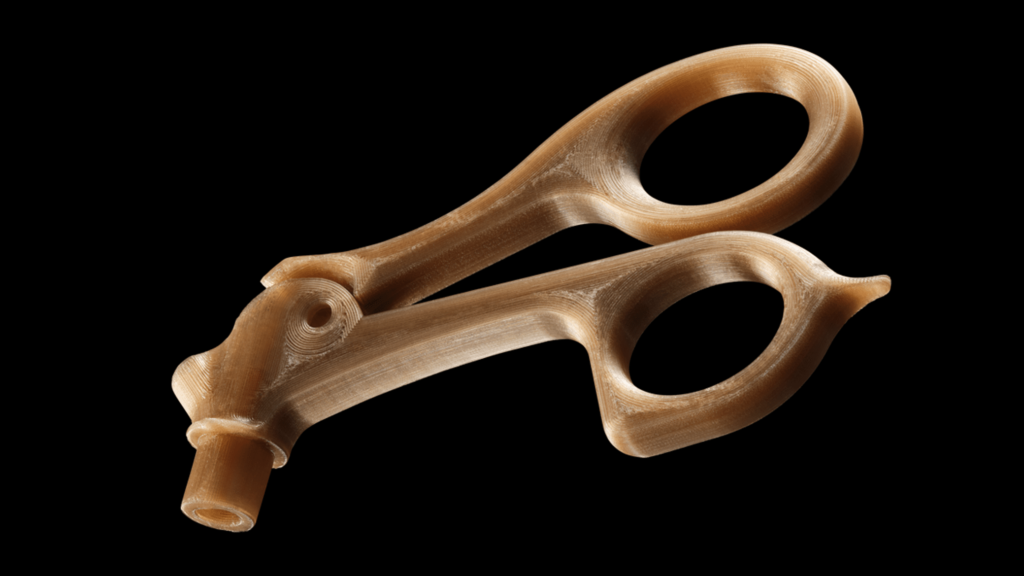
Due to its resistance to cleaning agents and disinfectants as well as repeated autoclaving and steam sterilization, PPSU is ideal for medical and dental instruments and tools, such as tool handles, surgical trays, blood filtration housings, and measuring instruments.
It is also used for implantable devices, such as shunts and valves, due to its non-toxicity, biocompatibility, and durability.
Industrial
PPSU is suitable for use in the oil & gas industry as it is resistant to most chemicals used in this industry. It can also be used to manufacture pipe fittings and manifolds for plastic piping systems.
Food
PPSU is used in the food industry due to its non-toxicity. This includes parts in direct contact with food and water, including conveyor belts and water purification membranes, as well as consumer products, such as cookware and reusable baby bottles.
Automotive
PPSU application in automotive includes parts subjected to high heat, steam, and automotive fluids. For example, coolant system parts such as thermostat housings and water pump impellers are common use-cases for PPSU. It can also be used in some under-hood electrical parts due to its electrical insulation properties, e.g., connectors and sensor housings.
Aerospace
Due to PPSU’s non-toxicity and low flammability along with its low smoke generation and light weight, it is used to manufacture aerospace interior components, such as ventilation system housings and seat parts.
Electrical
PPSU is used in semiconductor manufacturing equipment owing to its low ionic contamination. It can also be used for electrical component housings, especially under harsh chemical and thermal conditions.
PPSU Composites
PPSU composites mainly incorporate glass fiber (GF) or carbon fiber (CF), and the choice of filling depends on the application.
| Property | Unfilled (Radel R-5000) | Glass-Reinforced (RG-5030) |
| Filler Content (%) | 0 | 30 |
| Tensile Strength (MPa) | 69.6 | 118 |
| Flexural Strength (MPa) | 91.0 | 170 |
| HDT (°C) | 207 | 214 |
Glass-Fiber-Reinforced PPSU
GF-PPSU offers several advantages, including:
- Better mechanical strength and stiffness over unfilled grades
- Lower cost than CF-PPSU
- Better heat resistance than unfilled grades
- Similar electrical properties to unfilled grades
These enhancements of GF-PPSU allow its use in applications requiring higher strength and stiffness, such as structural components and valve bodies.
Carbon-Fiber-Reinforced PPSU
CF-PPSU’s advantages include:
- Higher strength and stiffness compared to unfilled grades
- Lower weight than GF-PPSU
- Better heat resistance than unfilled grades
- Electrically conductive rather than insulating
CF-PPSU is preferable to GF-PPSU when weight is of great importance, as is common in automotive and aerospace components.
Comparison to Other High-Performance Polymers
| Property | Polyphenylsulfone (PPSU) | PEEK | Polyethersulfone (PES) | PEI (ULTEM) | PEKK |
| Continuous Operating Temperature | 180 °C | 260 °C | 180 °C | 170 °C | 260 °C |
| Thermal stability | Lower than PEEK | Highest | Lower than PEEK | Moderate | High |
| Mechanical Properties at High Temperatures | Lower strength and stiffness than PEEK, but higher elongation at break and toughness | Most consistent performance | Lower | Good up to 170 °C | High |
| Chemical Resistance | Moderate | Excellent | Lowest | Moderate | Excellent |
PPSU is often chosen when PES lacks the toughness and steam resistance an application demands, while PEEK and PEKK’s extra thermal headroom isn’t necessary for the job and thus the extra cost is not justified. PPSU can be considered a mid-point polymer among high-performance thermoplastics, as it offers very reasonable chemical, thermal, and mechanical properties at an average price range.
In medical applications, PPSU and ULTEM are competing materials. However, PPSU’s superior impact strength and toughness as well as its superior chemical resistance give it an advantage over ULTEM in manufacturing medical tools subjected to repeated sterilization and accidental drops. On the other hand, ULTEM’s superior strength and stiffness make it more suitable for load-bearing medical devices.
3D Printing PPSU
PPSU processing methods include injection molding, extrusion, and additive manufacturing (3D printing). 3D printing of PPSU mostly means FDM.
Although injection molding is the most common manufacturing process for PPSU parts, FDM/FFF is becoming increasingly employed, especially for manufacturing parts with complex geometries, prototyping, or producing low-to-mid volumes.
In FDM, PPSU must first be dried, and the process has to be conducted using specialized or industrial-grade printers, with a nozzle temperature of 380–400 °C and a heated bed above 180 °C.
The Reasonably-Priced High-Performer
PPSU’s properties, such as stability, ductility, durability, and hydrolysis resistance, that stem from its unique amorphous structure make it an excellent material for several demanding applications. Its reasonable price point also gives it a competitive edge over other high-performance thermoplastics such as PEEK and PEKK. PPSU competes with ULTEM for medical applications, and the selection should be conducted based on the specific requirements of the application (PPSU’s toughness vs ULTEM’s strength and stiffness).
Achieve New Levels of Part Performance & Throughput
3D print the world's highest performance polymers - bigger, faster, and stronger than ever.