
Semicrystalline Polymers Explained with Examples
Nov 16th, 2026 • 11 min read
Semicrystalline polymers are among the most common commodity and engineering as well as high-performance plastics. Common examples of semicrystalline polymers include polyetheretherketone (PEEK), polyethylene, and polyamides.
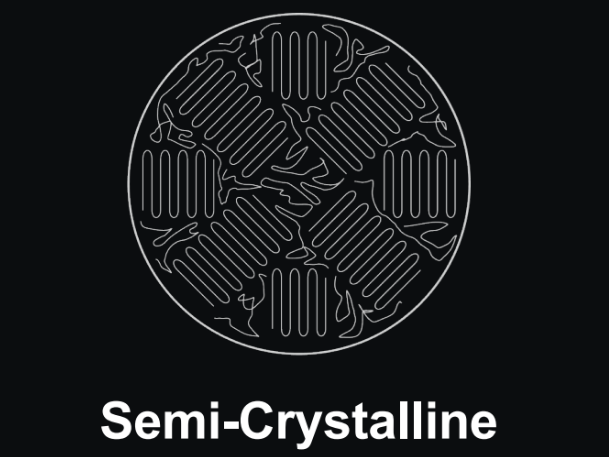
Semicrystalline polymers contain both crystalline and amorphous regions. In fact, most “crystalline” polymers are technically semicrystalline, as it is very rare to find a polymer with 100% crystallinity.
Crystalline regions contain highly ordered molecular chains, whereas amorphous regions contain disordered, tangled chains. These two regions exhibit very different responses to thermal and mechanical conditions and give semicrystalline polymers distinct chemical and mechanical properties from amorphous polymers.
The crystallinity of semicrystalline polymers can be controlled during processing through various methods, e.g., adjusting the temperature and time of crystallization.
In this article, we discuss the properties and performance of semicrystalline polymers.
The Chemistry and Structure of Semicrystalline Polymers
The crystalline regions of semicrystalline polymers consist of aligned chains packed into a repeating three-dimensional lattice. These crystalline regions form thin plate-like structures called lamellae surrounded by the amorphous regions containing spaghetti-like chains.
As mentioned, polymers cannot form perfect crystalline structures, in contrast to other materials like metals and ceramics, which can be 100% crystalline. An important parameter to gauge the crystallinity of a polymer is its “degree of crystallinity”, which is a quantification of the crystallized portion in polymer systems. The degree of crystallinity is typically expressed as a volume or mass fraction and can reach 90%.
The degree of crystallinity is one of the most important parameters of a semicrystalline polymer because it determines most of its characteristics. The level of crystallinity is affected by several factors:
- Polymer chemistry (e.g., molecular weight as well as chain regularity, branching, and flexibility)
- Polymer synthesis
- Processing parameters
Low-molecular-weight polymers, with regular, linear (non-branching), and highly flexible chains, exhibit higher degrees of crystallinity.
The Effects of Processing on Crystallinity
The processing parameters that affect the degree of crystallinity include:
- Cooling rate
- Nucleating agents and fillers
- Orientation during processing
- Annealing temperature and time
Cooling Rate
Cooling rate can be considered the most important processing parameter affecting the degree of crystallinity. A slower cooling rate allows the polymer chains sufficient time to pack into ordered crystals. This also results in larger and more uniform crystals.
In contrast, subjecting polymers with inherently slow crystallization kinetics, such as polyethylene terephthalate (PET), to very rapid cooling processes can result in a completely amorphous polymer. This happens because the polymer chains freeze in place before they have time to organize into ordered crystals.
In non-isothermal processing techniques, such as injection molding and selective laser sintering (SLS, a 3D printing process), crystallization is terminated by cooling down to around Tg.
Nucleating Agents and Fillers
Nucleating agents are additives that can provide nucleation sites for crystals to grow, which accelerates and enhances the crystallization process while increasing the crystallization temperature, resulting in higher numbers of smaller crystals and larger degrees of crystallinity.
Small amounts of fillers can perform a similar role, providing nucleation sites. However, fillers can have the opposite effect, suppressing crystallization by limiting the spaces available for crystals to grow and reducing chain flexibility. Thus, optimization of the type, amount, and particle size of fillers is crucial for achieving the desired polymer crystallization.
Orientation During Processing
Another important aspect is orientation during processing. During polymer processing using techniques such as extrusion or injection molding, applying a shear force to a polymer melt can promote crystallization.
The applied shear force causes polymer chains to be oriented along the flow direction. This orientation induces nucleation and crystalline domain growth, which promotes crystallization within the polymer matrix.
Annealing Temperature and Time
Annealing is a heat treatment typically performed post-processing at temperatures above Tg and below the melting point. This treatment provides amorphous chains with sufficient mobility, so that they can rearrange into ordered segments. This allows the growth of existing crystals and the formation of new crystals.
Thermal Behavior of Semicrystalline Polymers
The thermal behavior of semicrystalline polymers is mainly controlled by two temperatures – the glass transition temperature (Tg) and the melting temperature (Tm).
What Happens Below Tg?
In this temperature range, the polymer chains remain frozen, showing glassy amorphous regions because molecular motion and segmental mobility are limited.
The polymer is typically stiff below Tg, and both crystalline and amorphous regions contribute to this stiffness. The polymer may also be brittle, depending on the temperature and the amorphous-to-crystalline ratio. Brittleness tends to increase at very low temperatures and with increasing crystalline content.
What Happens Between Tg and Tm?
When a polymer is heated above its Tg, its amorphous chains gain mobility, causing the amorphous regions to transition from the glassy to the rubbery state. In contrast, its crystalline regions remain intact, acting as a skeleton that reinforces the material up to temperatures near its Tm.
This behavior allows semicrystalline polymers to preserve part of their stiffness at temperatures much higher than their Tg. For example, high-density polyethylene (HDPE) can be used well past its Tg (about −120 °C).
In this temperature range, “cold crystallization” is an important phenomenon that may occur in slow-crystallizing polymers, such as PET, if they were rapidly cooled during their first processing. Cold crystallization is the process in which amorphous chains gain mobility by heating beyond Tg, allowing them to fold and rearrange into ordered crystals.
What Happens at Tm?
Tm marks the transition of semicrystalline polymers from solid to liquid. Around this temperature, melting of crystalline regions occurs, and the solid crystalline skeleton breaks down.
Melt-based processing techniques, such as fused filament fabrication (FFF, a 3D printing process) and injection molding, are carried out at temperatures above Tm to ensure complete melting of the polymer. In contrast, continuous use temperatures of these polymers should be well below their Tm to reduce creep and prevent failure.
How Crystallinity Affects Polymer Properties
Crystallinity is one of the most important factors affecting semicrystalline polymer properties.
Polymers with low-to-moderate crystallinity are tougher and easier to process, and they exhibit limited shrinkage. PET (crystallinity = 20%–35%) is an example of these polymers.
Polymers with moderate crystallinity show better creep resistance and are stiffer, stronger, and more chemically resistant. An example of this type is PEEK (crystallinity = 30%–40%).
Polymers with high crystallinity typically show higher stiffness, wear resistance, and chemical resistance, with lower ductility. An example of these polymers is HDPE (crystallinity = 80%–90%).
How Semicrystalline Polymers Perform in Engineering Applications
The combination of crystalline and amorphous regions shapes how these materials behave in service, from the temperatures they can tolerate to the dimensions they hold and the way they process.
Service Temperature
Unlike rigid amorphous polymers, semicrystalline polymers can be used above Tg (but below Tm), because their crystalline regions provide strength. However, the material’s modulus decreases sharply above Tg, then more gradually as the temperature approaches Tm.
When a polymer is to be used above Tg and stiffness or creep resistance is essential, fiber reinforcement is used.
Heat-deflection temperature is also an important temperature that must be considered when determining service temperature, especially for polymers used under heavy loads.
Dimensional Stability and Shrinkage
Typically, semicrystalline polymers show higher percentage shrinkage than amorphous polymers. This is because chains organized in ordered crystals take up less space and reduce specific volume compared to disordered, tangled chains.
Semicrystalline polymers typically exhibit shrinkage of 1%–3%. The exact shrinkage of each polymer depends on several factors, such as its degree of crystallinity, fillers, processing technique, and cooling rate.
Shrinkage must be carefully considered during processing because it affects the polymer’s final dimensions. Shrinkage can be mitigated by modifying the mold in injection molding or adding fillers.
Mechanical Performance
High crystallinity polymers show increased stiffness, yield strength, and resistance to creep, heat, and chemicals, but they exhibit lower ductility and impact toughness.
Thus, material selection should be conducted based on the application requirements. For a certain polymer, a more amorphous variety should be selected when impact toughness is the top requirement, while a more crystalline one would perform better in a chemical-intensive environment.
Polymer Processing
Semicrystalline polymers require controlled processing to achieve the required crystallinity. In injection molding, several factors, such as melt temperature, mold temperature, injection speed, and cooling time, should be carefully optimized.
For example, a low mold temperature can result in stresses and warpage because it creates two areas: a more amorphous skin (near the mold) and a more crystalline core.
Semicrystalline polymers are more challenging to process via FFF 3D printing compared to amorphous polymers. FFF proceeds by depositing consecutive layers. These layers may undergo unequal shrinkage, causing stresses, warping, and reduced dimensional stability. Moreover, crystallization and molecular diffusion occur simultaneously, competing with each other, which may cause poor adhesion and delamination.
Techniques to improve semicrystalline polymer processing via FFF include controlling the bed, chamber, and nozzle temperatures; controlling the cooling airflow; post-processing annealing; and fiber reinforcement to reduce shrinkage.
Semicrystalline Polymer Examples
The examples below span the full range of semicrystalline polymers, from the commodity plastics that account for most plastic produced worldwide to high-performance engineering thermoplastics. Each represents a different balance of crystallinity, heat resistance, and processability.
PA
Polyamides (PA), commonly known as nylons, are engineering thermoplastics whose amide linkages form strong hydrogen bonds between chains. This drives crystallization and gives nylons their toughness, wear resistance, and resistance to oils and fuels.
The same hydrogen bonding makes nylons hygroscopic, so absorbed moisture shifts their dimensions and mechanical properties. They are widely used in gears, bearings, and under-hood automotive parts, and are among the most commonly printed engineering thermoplastics, though they require thorough drying.
PET
Polyethylene terephthalate (PET) is a polyester with slow crystallization kinetics. Cooled rapidly it stays largely amorphous and optically clear, while controlled cooling or annealing develops crystallinity and raises its stiffness and thermal resistance.
This is why the same polymer serves as clear bottles, oriented film, and engineering parts. PET must be dried before processing, and its printed form is usually PETG, a copolyester modified to suppress crystallization and the warping that comes with it.
PE
Polyethylene (PE) is the highest-volume plastic in the world, and its properties are set almost entirely by chain branching. Linear, highly crystalline HDPE is stiff and chemically resistant, while heavily branched LDPE is softer and more flexible.
PE is inert and inexpensive, suiting it to pipe, tanks, and packaging film. It is rarely 3D printed, as its high shrinkage and poor bed adhesion make dimensional control difficult.
PEEK
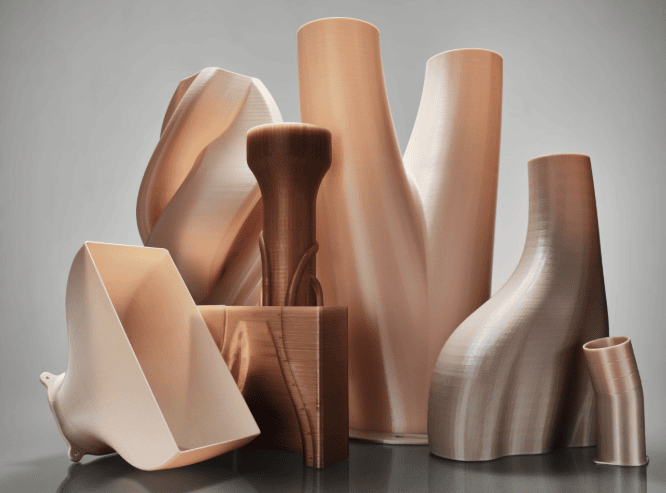
Polyetheretherketone (PEEK) is a high-performance engineering thermoplastic. It was designed for demanding applications and harsh environments as it exhibits high chemical and thermal resistance.
PEEK exhibits a high strength-to-weight ratio, making it ideal as a metal alternative in weight-sensitive applications such as aerospace and automotive. Moreover, it is flame-retardant, with high fatigue, wear, and creep resistance. Printing it demands one of the highest chamber temperatures in FFF, around 230 °C–250 °C, to develop crystallinity and avoid delamination.
Semicrystalline TPI
Thermoplastic polyimide (TPI) can be amorphous or semicrystalline. Semicrystalline TPI is also a high-performance thermoplastic that is strong and flame-retardant. It also offers high thermal and chemical resistance, but it is prone to hydrolysis, preventing its use in some medical applications. Printing it calls for a chamber of roughly 210 °C–230 °C.
Semicrystalline PEKK
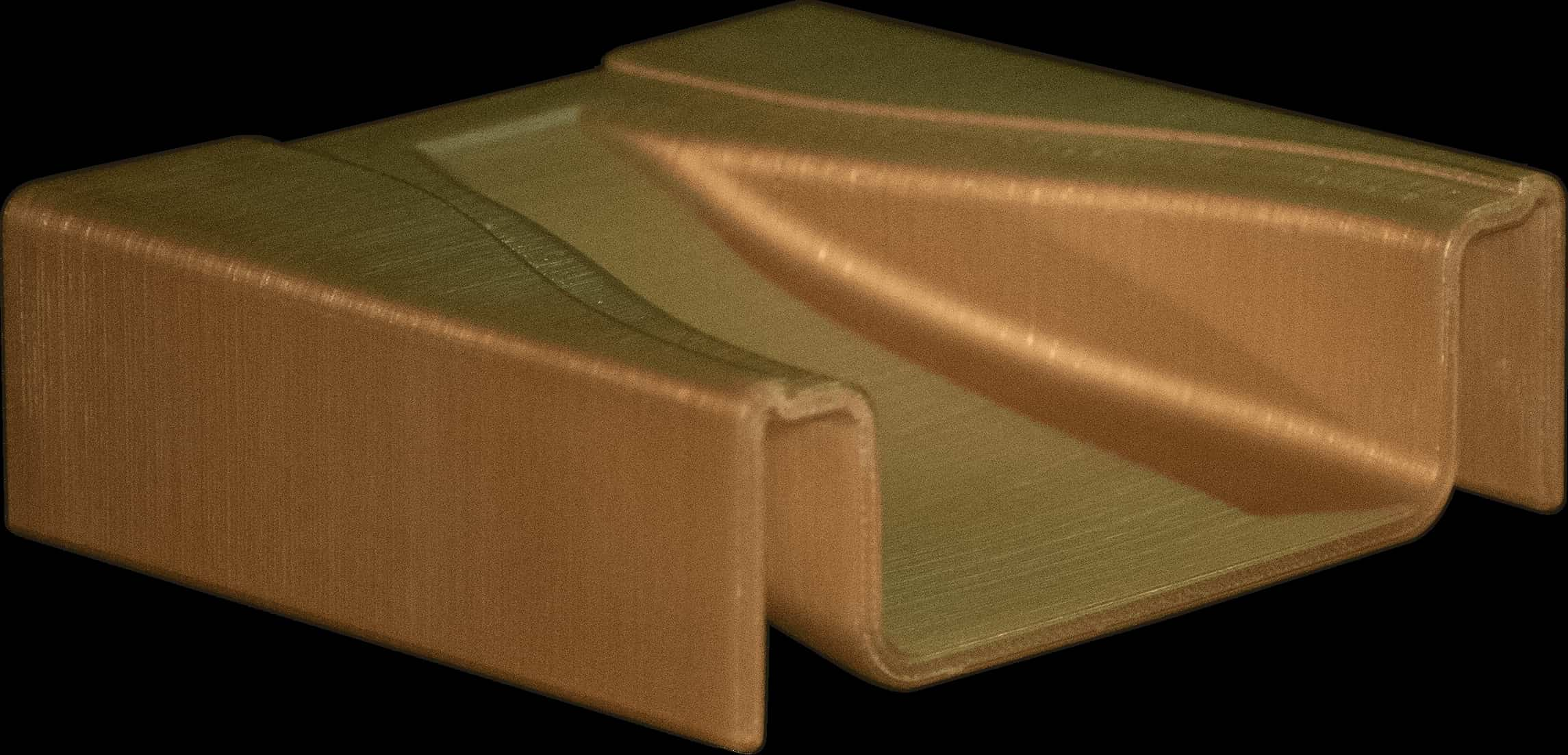
Similar to TPI, polyetherketoneketone (PEKK) is a high-performance plastic with both amorphous and semicrystalline forms. PEKK is a copolymer, enabling more control over its crystallization rate by tuning the ratio between its two monomers.
Semicrystalline PEKK also exhibits excellent heat, chemical, and wear resistance; biocompatibility; and mechanical properties comparable to those of PEEK. That tunable crystallization also makes it the most forgiving of these materials to print, needing a chamber of only 120 °C–140 °C.
PPS
Polyphenylene sulfide (PPS) is an engineering thermoplastic, with good mechanical and thermal properties at a lower price point than PEEK. PPS offers better chemical resistance than most engineering plastics.
This outstanding chemical resistance makes it ideal for several applications, such as engine parts, medical equipment subjected to sterilization chemicals, and pump enclosures in the oil and gas industry. Unusually for this group, PPS needs no high-temperature chamber, as its heat resistance comes from crystallinity rather than a high Tg. Controlling the cooling rate matters more than the absolute chamber temperature.
The Role of Semicrystalline Polymers
Semicrystalline polymers carry most of the load in modern engineering plastics, because their crystalline regions keep working well above the temperature at which an amorphous polymer would soften. That same structure is what makes them demanding: higher shrinkage, a narrower processing window, and performance that depends as much on how the part was cooled as on which polymer was specified.
Crystallinity is therefore less a fixed property than a lever, tuned toward toughness or toward stiffness and chemical resistance by the processing parameters rather than the datasheet.